
Mathematics
Curriculum Overview
Through a solid and hierarchical curriculum, diversified teaching strategies, and rich in-class and extra-curricular experiences, our school's Mathematics subject fosters students' mathematical knowledge, skills, and positive attitudes. This enables students to not only master foundational mathematical knowledge and computational skills, but also develop rigorous logical thinking, problem-solving abilities, and innovative application capabilities, while building confidence through exploration.
Curriculum Features
- Conceptual Construction: Mathematics is an essential tool for understanding quantities, shapes, patterns, and data. We value students' complete mathematical experiences. Students construct concepts within meaningful contexts, allowing their understanding to progressively evolve from initial, intuitive comprehension to more sophisticated thinking and precise expression using mathematical language.
- High-Order Thinking: Through inquiry, reasoning, and problem-solving activities, we cultivate students' creativity and flexible thinking, thereby enhancing their high-order thinking capabilities.
- STEAM & Generic Skills Integration: Mathematics serves as the foundational language and tool for science, technology, and engineering. The curriculum emphasizes foundational thinking and data analysis applications in these fields. Through hands-on operation, testing, refining, and finally sharing and exchanging ideas with peers, students enhance their generic skills throughout the process.
- Differentiated Learning: Through group work, appropriate differentiation, and flexible grouping, students are empowered to unleash their potential under suitable challenges and support.
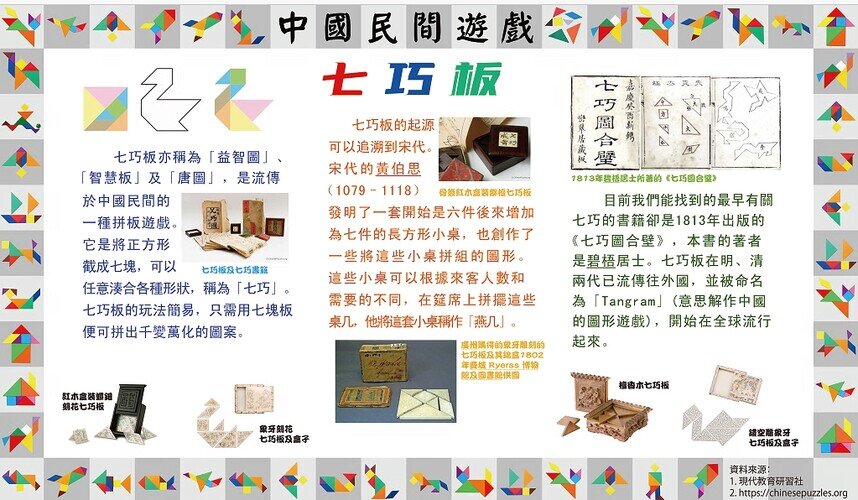
- Values & Cultural Heritage: Appropriate topics and activities are used to cultivate positive values such as perseverance, while deepening students' understanding and appreciation of Chinese culture and the wisdom of our ancestors.
 |  |  |
Learning Experiences
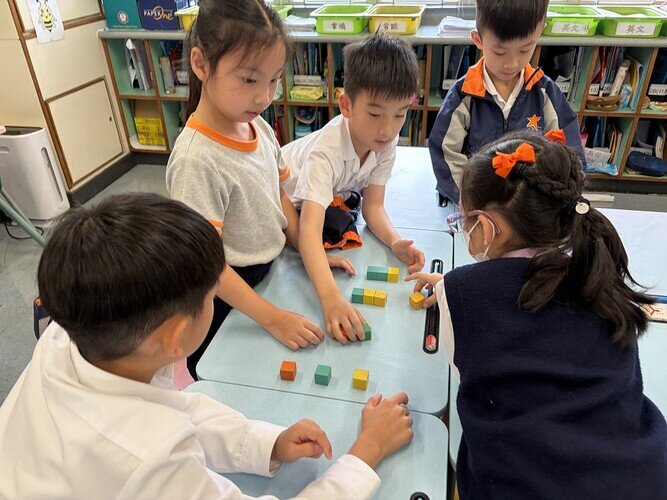
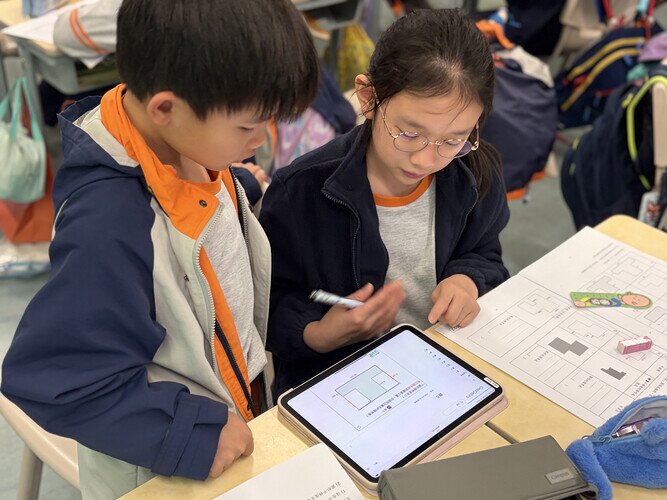
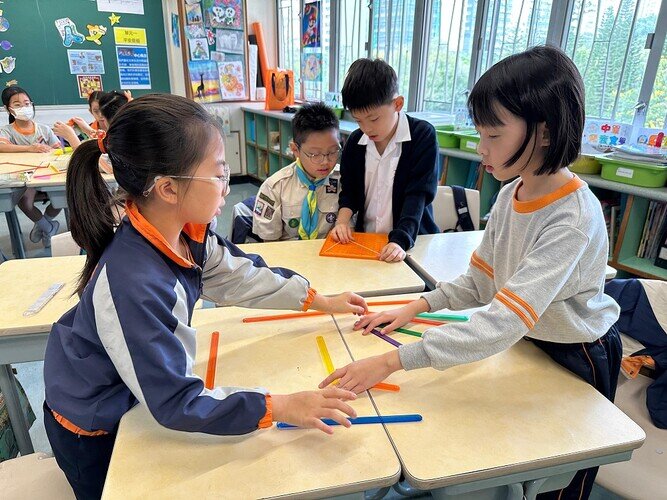
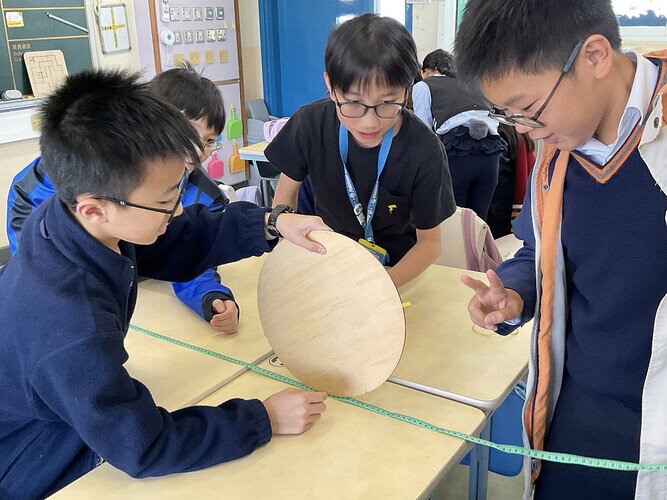
Our lessons flexibly combine direct instruction, inquiry-based learning, and collaborative learning. By manipulating teaching aids, discussing strategies, completing projects, and sharing findings, students gradually connect mathematical concepts to real-world problems.
Curriculum-Related Activities
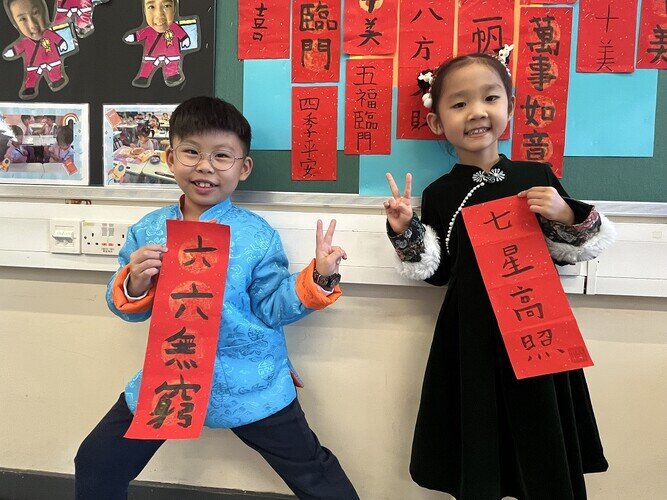
By creating "Digital Fai Chun", students learn that posting Fai Chun during Lunar New Year is an item of intangible cultural heritage, thereby gaining a deeper understanding of traditional Chinese culture.
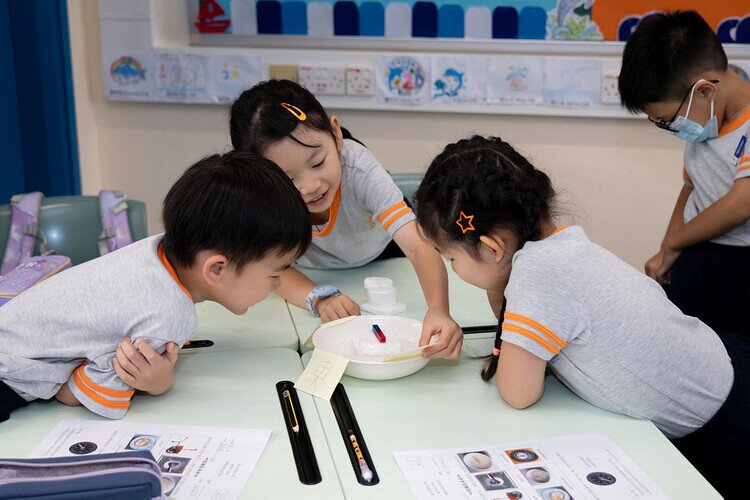
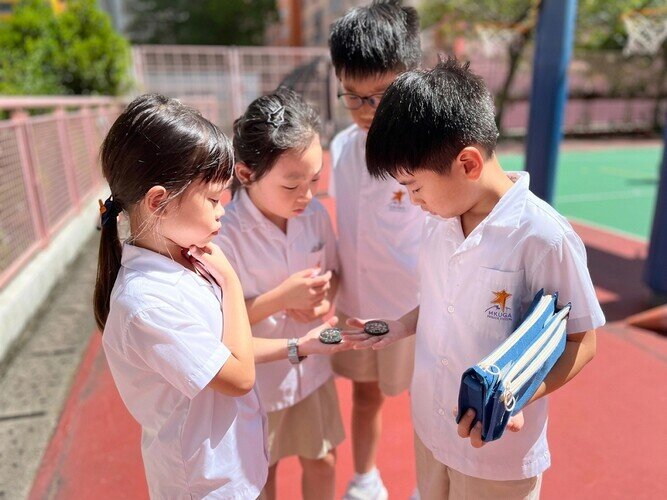
Students learn about the development of the Chinese compass, observing, testing, and sharing ideas during hands-on compass-making activities.
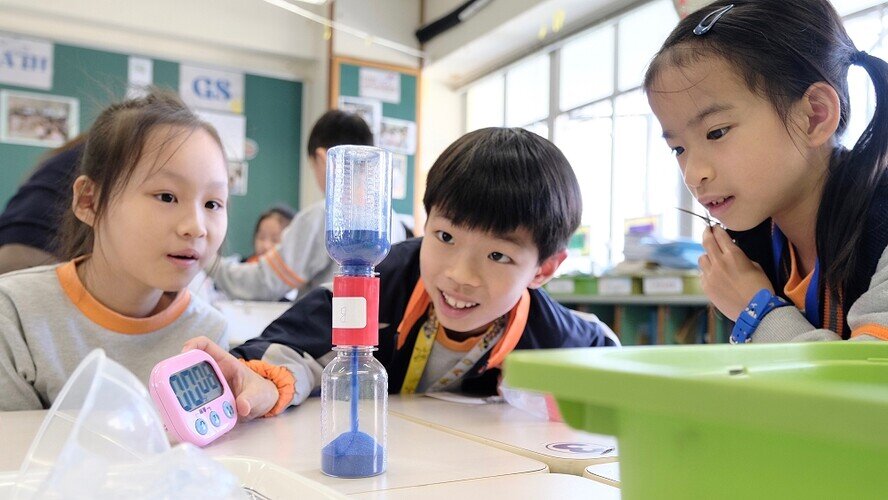
Through making and testing hourglasses, students explore the concept of time, record test results, and make improvements — experiencing the integration of mathematics and science.
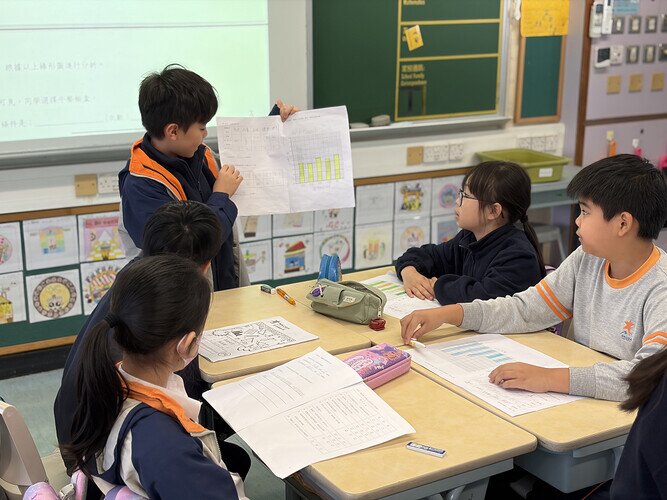
Students conduct a survey on the priority factors all schoolmates consider when selecting lunch boxes, analyze the results, and provide recommendations.
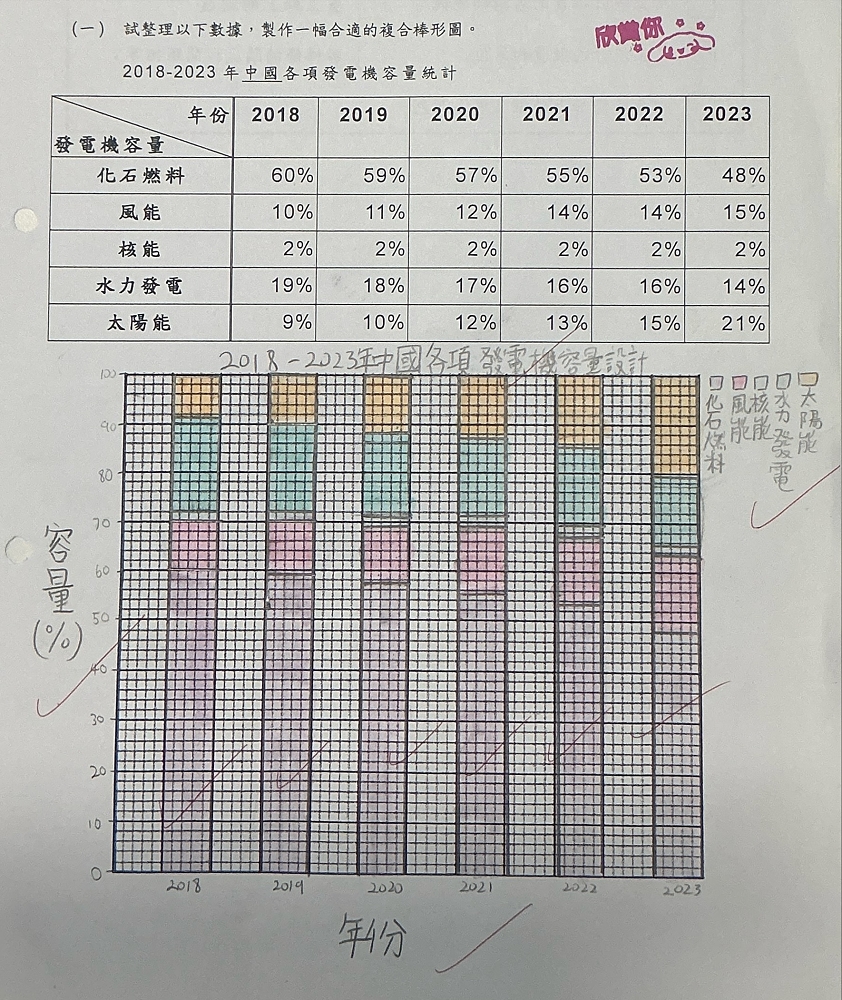
Students collect and analyze data on China's power generation from solar and fossil energy in class, creating compound bar charts. Through this, they gain insight into the nation's renewable energy development and are reminded of their responsibility to safeguard national resource security.
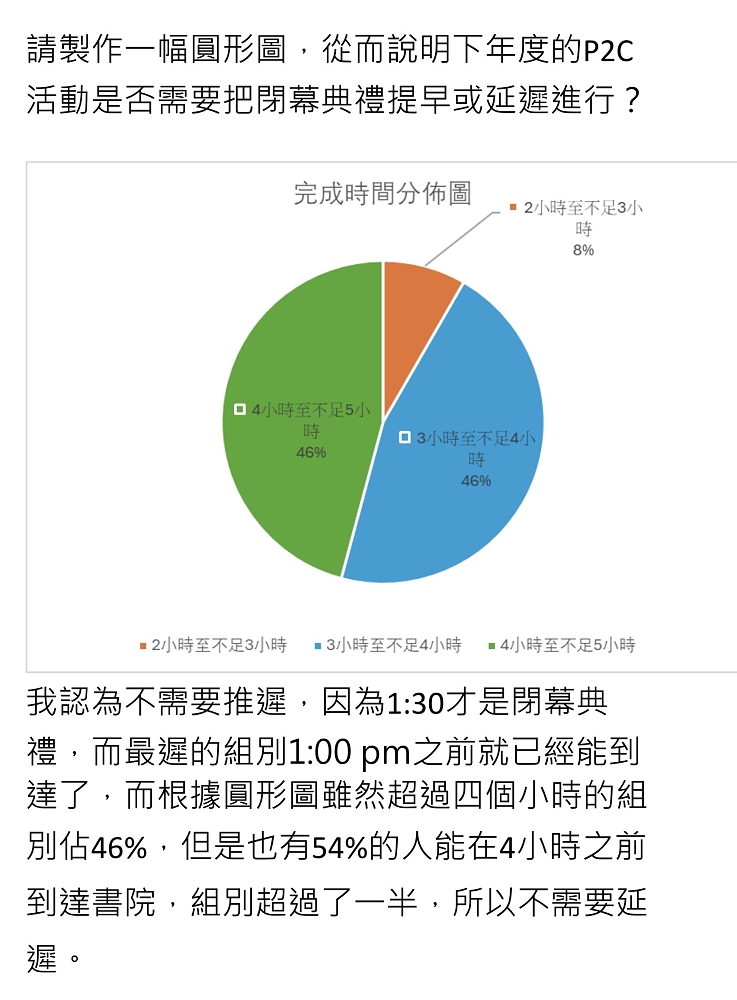
Students compare and discuss the data from their regular 9-minute endurance run training in PE lessons with each group's completion status on the P2C Walkathon, offering reference points for future participants.
Learning Mathematics Through Reading
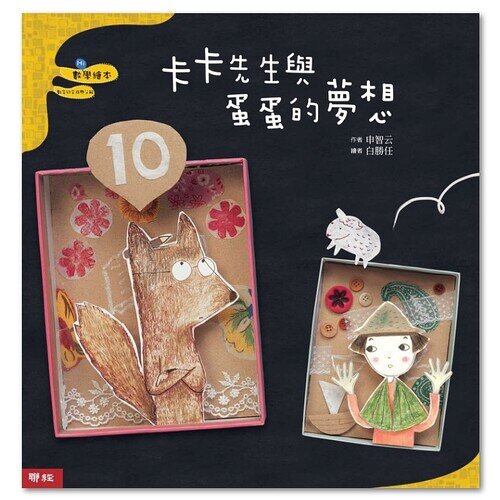
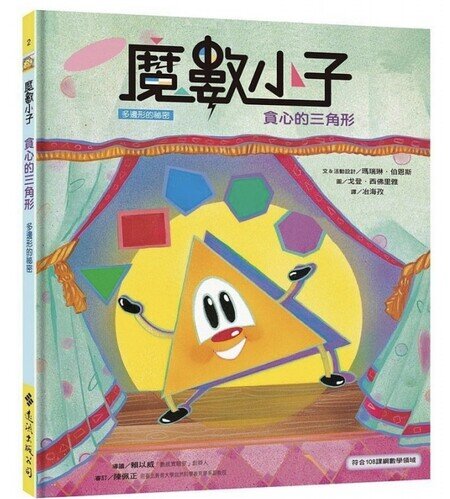
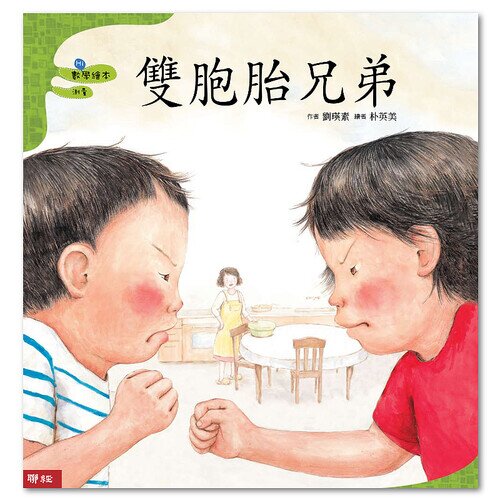
The Reading Programme is implemented in Primary 1 to Primary 3, enabling students to expand their mathematical experiences through stories, foster interest, and connect mathematics, language, and daily life.
- Unit Introductory Reading: Carefully selected books closely aligned with teaching units are used as pre-lesson introductory activities to arouse curiosity and learning motivation.
- Extended Reading: Students are encouraged to read independently during holidays to broaden their mathematical knowledge and deepen their understanding of mathematical applications, history, and culture.
 |  |  |
Our Vision:
We hope every student can explore the mysteries of mathematics, build confidence, and become a learner with a logical mind and innovative problem-solving capabilities.

Using a Compass (Math P2)

Walk for a Kilo (Math P3)

Making a Compass (Math P2)

Measuring Activities (Math P2)

Speed Calculation Competition (Math KS1)

Math P2: Directions

Math P2: Compass

Mathematics P2

Mathematics P1

P2 Mathematics Activity

P1 Math QuickCal 2022-2023

P.3 Walking Experience Activities