

Information and Communication Technology
In the digital age, issues such as fake news, cyberbullying, personal data privacy, and internet addiction have become major societal concerns. As the use of emerging and advanced technologies becomes increasingly widespread, ethical considerations surrounding tech usage have also grown significantly.
What is Information Literacy?
Information Literacy refers to the knowledge, skills, and attitudes that enable students to use information effectively and ethically, empowering them to become responsible digital citizens and lifelong learners.
Cross-Curricular Collaboration
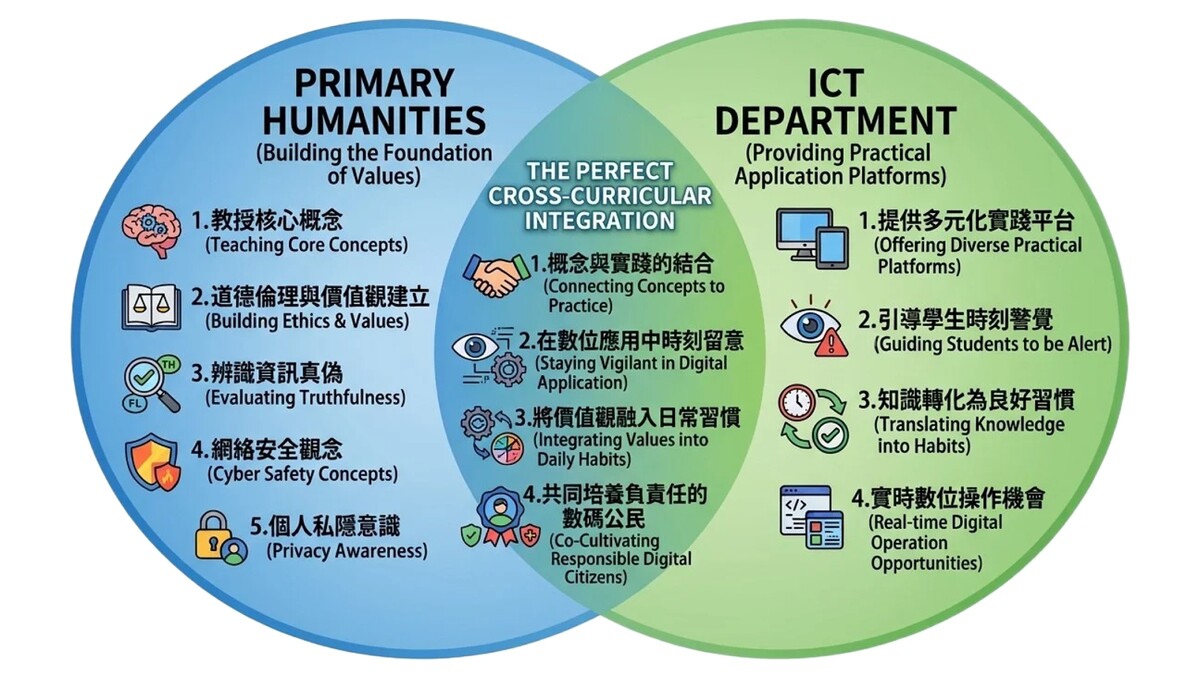
To seamlessly embed Information Literacy into everyday learning, we emphasize cross-curricular collaboration:
- Primary Humanities: Responsible for teaching foundational concepts, digital ethics, and core values (e.g., evaluating truthfulness, cyber safety, and privacy awareness).
- ICT Department: Provides practical hands-on application platforms, encouraging students to stay alert and exercise good digital habits during real-world technology use.
 |
|---|
Learning Objectives & Core Competencies
Integrated across various learning stages, our curriculum aims to cultivate students' core competencies:
- Identify Information Needs: Recognize when information is needed and define its scope.
- Process & Share Information: Search, evaluate, extract, organize, express, and share information effectively.
- Drive Innovation: Leverage information to create new ideas and solutions.
- Adapt to Digital Changes: Navigate and adapt to the rapidly evolving information landscape.
- Uphold Digital Ethics: Reject the unethical use of information and technology.
- Practice Self-Protection: Protect personal safety, privacy, and well-being in the digital world.